
Integrated vs Standalone Card Machines: Which Is Best for UK Businesses?
One mistyped total a week costs more than most people think. Here is when connecting your card machine to your till is worth it, and when it is not.
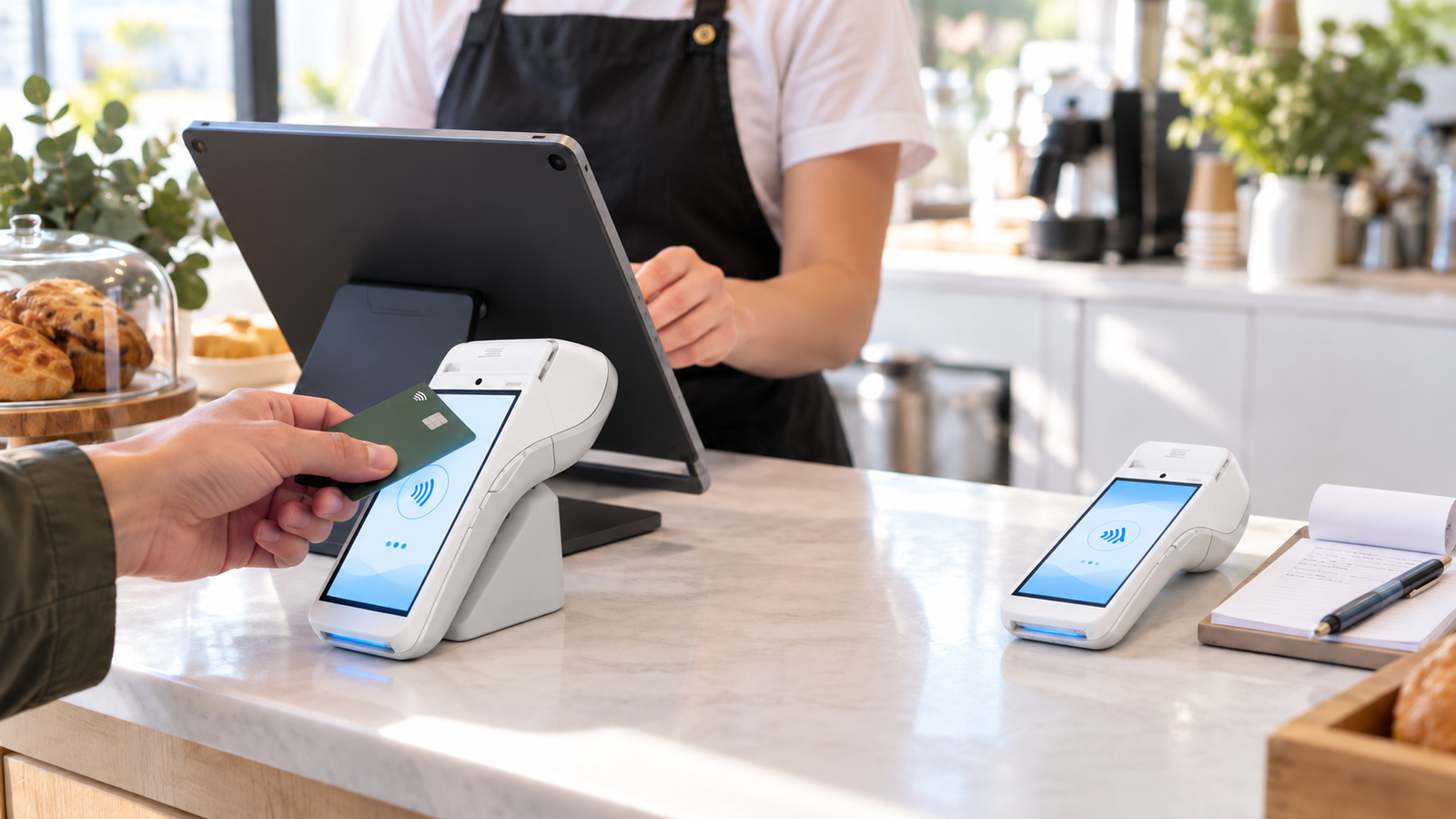
A member of staff types £42.00 instead of £4.20. It's caught at the end of the day, refunded on Monday, and it takes twenty minutes of somebody's life.
That's the whole case for an integrated card machine in one sentence. It can't happen, because nobody types anything.
Whether that's worth changing your setup depends on your volume, your staff and how your end-of-day currently goes. Here's the straight comparison.
What each one means
A standalone card machine sits next to the till and works on its own. Your team reads the total off the screen and keys it in.
An integrated card machine is connected to the till, by cable, Wi-Fi or Bluetooth. You press pay on the EPOS and the amount appears on the terminal automatically.
Both take the same cards through the same networks. The difference is entirely about what happens at the counter and at close.
The differences that matter day to day
StandaloneIntegrated
Amount entered | Typed by staff | Sent by the till
Mistyped totals | Possible | Removed
Seconds per sale | Slower, roughly 5–10 seconds more | Faster
End-of-day reconciliation | Manual comparison of two totals | Matched automatically
Tips | Prompted on the terminal only | Can be split by staff member in the till
Split bills | Manual arithmetic | Handled in the EPOS
Refunds | Separate process on the terminal | Triggered from the original sale
If the till goes down | Terminal keeps working | Most systems fall back to standalone mode
Setup | Plug in and go | Needs a compatible terminal and provider
Where integration pays for itself
- High transaction counts. Ten seconds saved on 200 sales a day is over half an hour of counter time.
- Table service. Splitting a £140 bill four ways by hand at 9pm is where errors live.
- Part-time or new staff. Fewer keystrokes means fewer chances to get it wrong.
- Tips. If you distribute card tips, having them attributed in the till saves an argument.
- Reconciliation. If your Z-report and your card totals disagree most weeks, integration usually ends that.
Hospitality feels this hardest, which is why most restaurant setups on our hospitality EPOS pages assume integration from the start.
When standalone is still fine
Low volume with high average values. A furniture shop taking eight payments a day doesn't lose much to typing.
Mobile trading, where the terminal goes places the till doesn't. Market stalls, mobile therapists, event stands.
And any situation where you're mid-contract on a card machine you can't move yet. Integration can wait until the term ends; it's rarely worth an early exit fee.
Questions to ask before you connect anything
- Is my current terminal model supported by the till software?
- Does my existing acquirer allow integration, or do I need to move?
- Is there a one-off integration fee, or a higher monthly rate?
- What happens to payments if the till crashes mid-service?
- Does it support tips, split bills, partial refunds and gratuity by staff member?
- Who do I call when a payment fails — the till company or the card company?
That last question is the one people forget. A single supplier for both means one number to ring, which matters at 7pm on a Friday.
What this looks like in a real business
Illustrative example, figures invented to show scale. A bistro does 90 covers on a Saturday, average bill £38, roughly 45 card payments across the evening.
On a standalone machine, each payment adds about eight seconds of typing and checking. That's six minutes across the night, which is not the real cost.
The real cost is the two split bills that get miscounted, the one £58 typed as £85, and forty minutes on Sunday matching the card total to the till total.
After integrating, the owner reports the same three things every operator does: reconciliation drops to a glance, tips are attributed by server without a spreadsheet, and disputed transactions are traceable to a specific order.
No hardware change was needed beyond the terminal itself, and the rest of the counter kit stayed as it was — see EPOS hardware for the usual layouts.
Frequently asked questions
Can I integrate my existing card machine with a new till?
Sometimes. It depends on the terminal model and your acquirer's support for integration. Ask both before you buy, and get the answer in writing.
Does an integrated card machine cost more?
Not necessarily. Rental is often similar; some providers charge a small integration fee. Compare the total monthly cost of the two setups rather than the rate alone.
What happens if my till breaks — can I still take payments?
Most integrated terminals switch to standalone mode so you can key amounts manually. Confirm this with your supplier before install, and make sure staff know how.
Do integrated card machines work over Wi-Fi?
Yes, most do, and many also take a SIM as a backup. Wired connections are more reliable at busy counters; portable terminals suit table service.
Is integration worth it for a small shop?
Below roughly forty card payments a day, the saving is modest. Above that, most owners notice it within a fortnight.
Find out if your current terminal can connect
Tell us the make and model of your card machine and who processes your payments, and we'll tell you whether it can connect to a till and what it would cost. Book a free demo and we'll show you an integrated sale, a split bill and a refund, end to end. More detail on integrated card payments and card machines is on the site.
More EPOS guides

How to Choose an EPOS System for a Small Shop: 12-Point Checklist
Twelve questions that separate a shop till you will still like in year three from one you will be trying to escape by month six.
Read article
Should You Buy or Lease an EPOS System in the UK?
"No upfront cost" is the most expensive sentence in EPOS sales. Here is how leasing, subscriptions and buying outright actually compare over four years.
Read article
What Are the Fees for a Card Machine in the UK?
The rate you were quoted is rarely the rate you pay. Here is every line on a UK merchant statement and how to work out what you are really charged.
Read article